
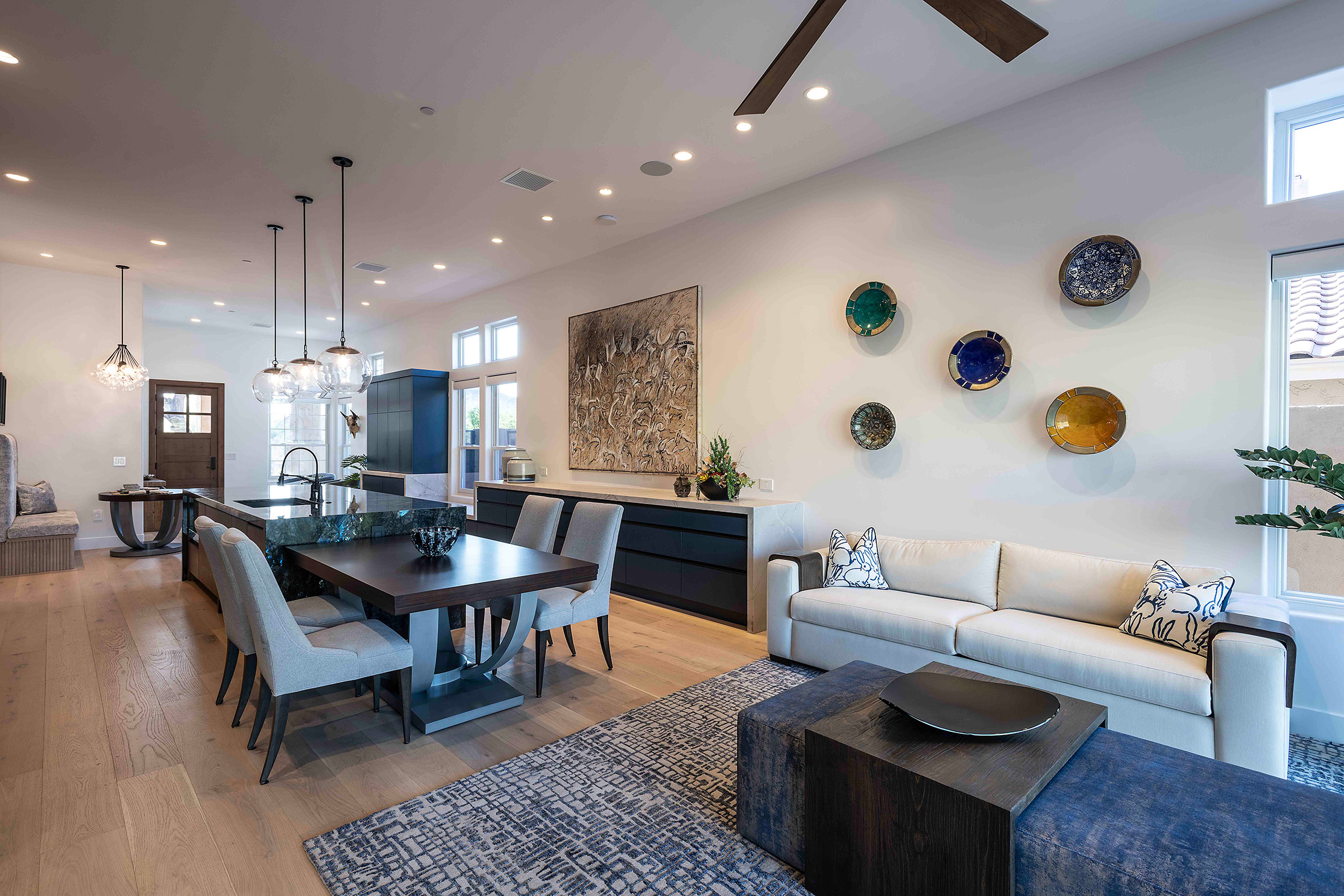
What are Scale & Proportion in Interior Design
When it comes to creating beautifully balanced interiors, scale and proportion in interior design are fundamental principles that every professional designer must master. These concepts go far beyond aesthetics; they’re essential for creating functional, comfortable, and visually harmonious spaces that feel just right.
What is Scale in Interior Design?
Scale in interior design refers to the size of objects and furnishings relative to the space they occupy and to the human body. Scale is specific and measurable. For example, when selecting a bed for a bedroom, designers consider its scale in relation to both the room’s dimensions and the average human height to ensure proper fit and functionality.
Understanding what is scale in interior design helps designers answer critical questions: Is this sofa too large for the room? Will this coffee table feel proportionate to the seating area? Does this chandelier match the ceiling height? Getting scale right is essential for creating spaces that feel comfortable and appropriately sized.
What is Proportion in Interior Design?
Proportion in interior design is the relationship between different design elements within a space. While scale compares objects to the room or human body, proportion examines how objects relate to each other. Proportion is more relative and helps designers understand the visual weight and balance between furnishings, architectural features, and decorative elements.
In practice, proportion and scale interior design principles work hand-in-hand. When both are applied correctly, they create interior spaces that feel balanced, inviting, and harmonious; adding both visual appeal and functional comfort to any room.
Key Elements of Proportion in Interior Design
Color Proportion: The 60-30-10 Rule
Achieving the right proportion in interior design starts with color balance. Professional interior designers use the 60-30-10 rule to create well-proportioned color schemes:
60% dominant color (typically walls or large furniture pieces)
30% secondary color (accent furniture, curtains, rugs)
10% accent color (decorative accessories, artwork, pillows)
This proportional approach to color creates visual harmony and prevents any single hue from overwhelming the space.
Light Proportion: Natural and Artificial Balance
The proper proportion of lighting, both natural and artificial, can dramatically affect how a room feels. Light proportion involves:
Balancing ambient, task, and accent lighting
Maximizing natural light sources
Using artificial lighting to complement natural light cycles
Creating depth and dimension through layered lighting
When scale and proportion are applied to lighting design, rooms appear more spacious, welcoming, and functional throughout the day.
Space Proportion: Furniture Placement and Flow
Space proportion refers to how objects are arranged within a room. Interior designers must consider:
Traffic flow patterns
Furniture placement relative to architectural features
Negative space (empty areas) versus furnished areas
The visual weight distribution throughout the room
Proper space proportion ensures that rooms feel balanced rather than cluttered or empty, with every element serving a purpose.
Shape Proportion: Creating Visual Cohesion
Shape proportion focuses on how the forms of different objects relate to one another. For visual harmony:
Pair rounded furniture with circular or curved accessories
Balance angular pieces with geometric patterns
Mix shapes thoughtfully to create interest without discord
Consider how furniture silhouettes complement architectural lines
The Golden Ratio Rule in Interior Design
Professional interior designers frequently rely on the golden ratio (1:1.618) when making scale and proportion decisions. This mathematical principle, found throughout nature and classical architecture, helps create aesthetically pleasing spaces.
The golden ratio can guide:
Color palette selection: Distributing colors in proportions that feel naturally balanced
Furniture placement: Dividing spaces to determine optimal furniture positioning
Room layout: Creating focal points and visual flow
Accessory arrangement: Grouping decorative items in pleasing compositions
Using the golden ratio helps interior designers achieve rooms that feel instinctively “right”, even if clients can’t pinpoint exactly why.
Why Scale and Proportion Matter in Interior Design
Mastering scale for interior design projects ensures that:
Furniture fits appropriately within rooms
Spaces feel neither cramped nor empty
Visual weight is distributed evenly
Rooms serve their intended functions comfortably
Design elements work together harmoniously
When scale and proportion are overlooked, even expensive furnishings and beautiful finishes can fail to create cohesive, comfortable interiors.
Expert Interior Design Services in Arizona
At Interiors Remembered, understanding scale and proportion is just one aspect of our comprehensive approach to luxury interior design. With over 30 years of experience and 600+ completed projects throughout the Scottsdale, Phoenix, Mesa, Sedona and beyond, our team expertly applies these timeless principles to create sophisticated, functional spaces that reflect your unique lifestyle.
Whether you’re building a new luxury home, remodeling an existing space, or simply refreshing your interiors, our award-winning design team brings expert knowledge of scale, proportion, color theory, and spatial planning to every project.
If you’re looking for a unique, luxurious, and trendsetting design for your space, contact the professionals at Interiors Remembered, Inc. We specialize in interior design and remodeling of homes and properties throughout the Phoenix area. Contact our Interior Design Firm at (480) 921-4224 for a consultation today!
What's the difference between scale and proportion in interior design?
Scale refers to the size of objects relative to the room and human body, while proportion is about how design elements relate to each other. Both work together to create balanced, harmonious spaces. If you’re planning a luxury home remodel, understanding these principles ensures your furniture and décor fit perfectly.
How do interior designers use the golden ratio?
Interior designers use the golden ratio (1:1.618) to create naturally pleasing spaces. This mathematical principle guides color distribution, furniture placement, and room layouts. Our full-service design team applies the golden ratio to every project for optimal visual harmony.
Can poor scale and proportion make a room feel uncomfortable?
Yes! Oversized furniture in small rooms or tiny accessories in large spaces creates visual imbalance. This makes rooms feel cramped, empty, or “off” even if everything is high-quality. Our interior design consultation helps you avoid these costly mistakes from the start.
How does Interiors Remembered apply scale and proportion principles?
With over 30 years of experience, we expertly balance scale and proportion in every project—from furniture selection to lighting placement. Our team serves clients throughout Phoenix, Scottsdale, Sedona, and Mesa. Contact us to discuss your project.

